Let’s be honest for a second. Nobody wakes up in the morning, stretches their arms, and shouts, “I can’t wait to rent a dumpster today!” It’s just not that kind of purchase. Usually, if you’re looking at dumpster rentals, it means you are dealing with something heavy. Maybe it’s a massive home renovation in Sandy, a chaotic garage cleanout in Ogden, or maybe you’ve just bought a fixer-upper in Sugar House that has a little more “character” (read: junk) than you bargained for.
You’re probably stressed about the timeline, the budget, or just the sheer physical labor of hauling trash. We get it. But here’s the thing—the dumpster itself shouldn’t add to that stress. In fact, if you manage it right, that big metal box sitting in your driveway can actually be the thing that keeps your project moving smoothly.
A lot of folks think renting a dumpster is as simple as “get box, throw trash, bye-bye box.” And sure, on the surface, that’s the gist of it. But if you’ve ever run out of space when you still have half a kitchen’s worth of cabinets to toss, you know there’s a bit of an art to it. Efficiency isn’t just about saving space; it’s about saving money and saving your back.
Whether you are a homeowner in Park City dealing with a slope or a business in Orem clearing out an old office, getting the most out of your rental comes down to smart planning. So, grab a coffee, and let’s talk about how to become a trash-loading wizard.
Size Actually Does Matter
This is where most people trip up right out of the gate. It’s the Goldilocks problem. You look at a 10-yard dumpster and think, “That’s huge, surely that’s enough.” Then you start tearing down drywall, and suddenly that bin looks like a teacup. On the flip side, you don’t want to pay for a massive 30-yard beast if you’re just tossing some old garden furniture.
You know what happens when you rent too small? You end up with a pile of debris sitting on your lawn next to the full dumpster, waiting for a swap-out. That costs you time, and it costs you an extra haul fee. It’s annoying.
If you are in Layton or Draper and you’re tackling a multi-room remodel, err on the side of caution. Go slightly bigger. It’s usually cheaper to rent one size up than to pay for two separate hauls of a smaller size. Think of it like packing a suitcase for a trip. If you try to cram two weeks of clothes into a carry-on, you’re going to have a bad time. Give yourself some breathing room.
However, don’t just guess. When you call us, describe your project. We’ve seen thousands of basements and roofs. We can usually tell you within seconds whether you need a 15-yarder or the big guns.
Location, Location, Location (and Permits)
Before the truck even backs up, you need a game plan for where this thing is going to live. This might sound trivial, but have you seen the driveways in some parts of Salt Lake City? They can be steep, narrow, or shared. You want the dumpster as close to the work area as possible to minimize walking distance. Carrying heavy debris an extra 20 feet doesn’t sound like much until you’ve done it fifty times in an hour.
But wait—can you actually put it there?
If you have a nice wide driveway in South Jordan, you’re probably golden. But if you need to place the bin on the street, especially in busier city zones, you might need a permit from the city. The last thing you want is a fine slapped on your project before you’ve even swung a hammer. We can help guide you on this, but it’s always good to check local regulations.
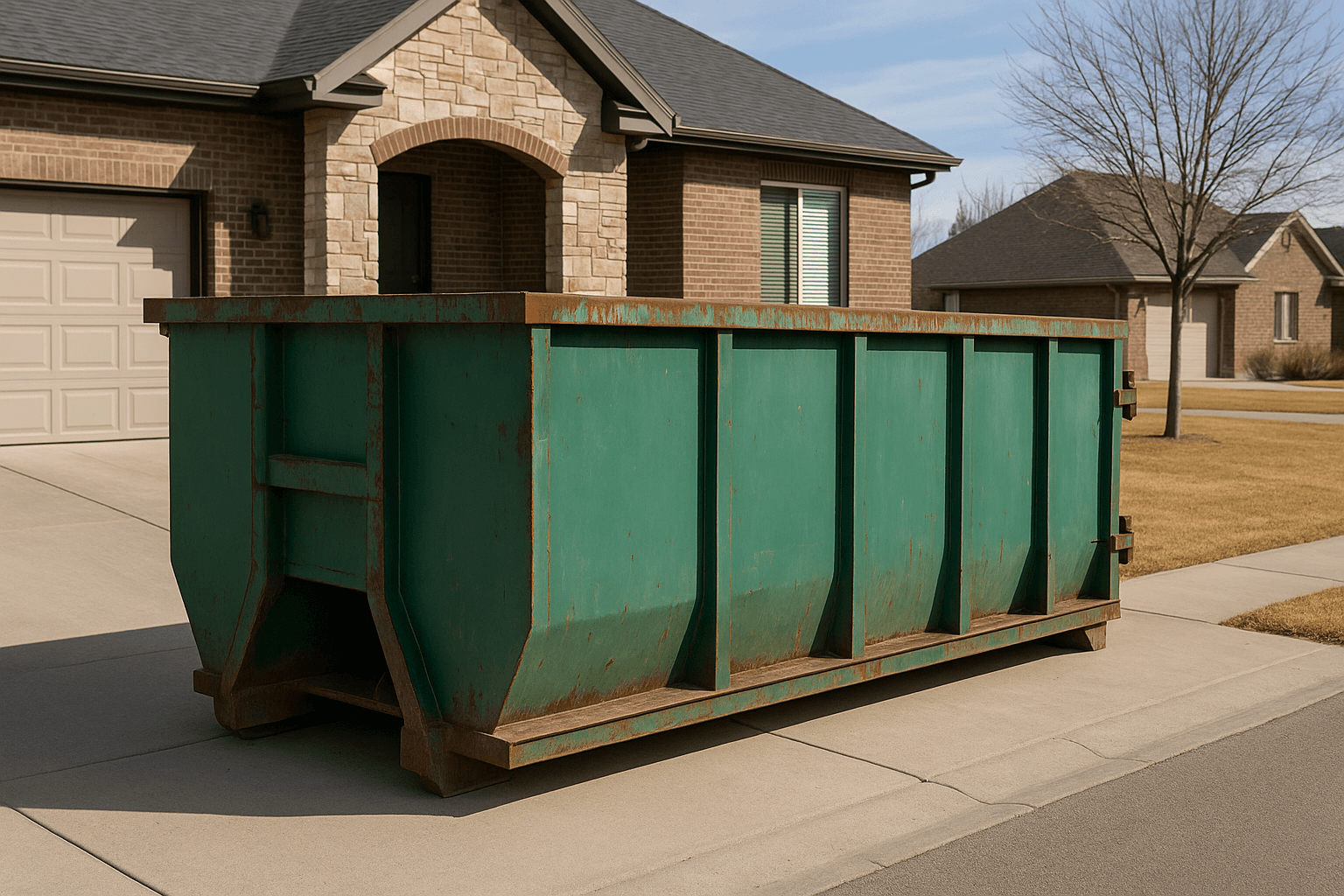
Pro Tip: Protect your property. Dumpsters are heavy steel beasts. Even though our drivers are incredibly careful, putting heavy steel on hot asphalt or decorative pavers can be risky. Lay down some plywood sheets where the wheels will sit. It distributes the weight and keeps your driveway looking pristine once the job is done.
Play Tetris with Your Trash
Okay, the dumpster is delivered. It’s sitting pretty on your plywood pads. Now the fun begins. Most people just start chucking things over the side. That’s great for letting off steam, but it’s terrible for efficiency. By simply throwing things in, you create huge air pockets—voids where nothing is occupying space, but you’re paying for it.
You need to channel your inner Tetris player. Here is how you load like a pro:
Use the Door: Most of our roll-off dumpsters have a swinging door at the back. Open it! Walk the heavy, bulky items to the front of the dumpster. Do not try to heave a sleeper sofa over the side wall unless you are trying to win a Strongman competition (and throw out your back).
Flat Stuff First: If you have plywood, drywall, or old doors, lay them flat on the bottom. This creates a smooth floor for the rest of the junk. If you throw them in haphazardly, they stick up and create awkward angles that prevent other stuff from settling.
Break It Down: This is the most satisfying part. You have an old cabinet? Smash it. A cardboard box? Flatten it. A weirdly shaped bookshelf? Take a sledgehammer to it. The smaller the pieces, the tighter the pack. You’d be amazed at how much space a hollow dresser takes up versus a pile of wood chips.
Fill the Gaps: Once you have the big items in, use the smaller debris—loose tiles, old insulation, general trash—to fill the cracks between the furniture. It settles like sand in a jar of rocks.
The “No-Go” List: Avoiding Surprise Fees
We want to take all your junk. Honestly, we do. But there are rules—some set by us, but mostly set by the EPA and local landfills. Putting prohibited items in your dumpster is a surefire way to kill your efficiency because you might have to climb back in there to fish them out, or you’ll get hit with a contamination fee. Nobody wants that conversation.
Here is a quick rundown of what usually can’t go in:
- Hazardous Waste: Paint, oil, pesticides, asbestos. If it has a warning skull on the bottle, keep it out.
- Tires: Landfills hate tires because they trap gas and float to the surface over time. Weird, right?
- Batteries: Specifically car batteries or lithium-ion types. They are fire hazards.
- Appliances with Freon: Old fridges or AC units need special handling.
If you have these items, just ask us. We can often point you to the right recycling center in Utah or handle it separately. It’s better to ask upfront than to bury a car battery at the bottom and hope nobody notices. (Spoiler: We usually notice.)
The Weather Factor (Because… Utah)
You know how the weather is here. One minute it’s sunny in Sandy, the next minute it’s dumping snow in the Cottonwood canyons. Weather actually impacts your dumpster rental efficiency more than you’d think.
Debris acts like a sponge. Old carpet, drywall, upholstery, and wood soak up water like you wouldn’t believe. If you rent a dumpster for a week and it rains or snows for three days straight, that debris is going to get significantly heavier.
Since dumpsters often have weight limits (measured in tons), water weight can push you over the limit, leading to overage charges. It’s essentially paying for rain. If you see a storm coming on the forecast, throw a tarp over the dumpster. Bungee cord it down. It keeps the load dry and keeps the neighbors’ trash from blowing into your bin, too.
Safety First (No, Really)
It sounds like a cliché from a corporate training video, but safety keeps you efficient. If you slice your hand on a rusty nail or twist an ankle jumping out of the bin, the project stops. And we want you to finish that project.
Wear gloves. Thick ones. Construction debris is sharp and unforgiving. Also, wear boots with thick soles. You don’t want to know what it feels like to step on a screw in sneakers. And please, keep the kids and pets away. A dumpster looks like a fun fort to a six-year-old, but it’s really just a box full of tetanus shots waiting to happen.
Also, don’t overfill the bin. We have to tarp these loads to drive them down the highway. If you have built a precarious pyramid of trash that sticks up two feet above the rim, our driver can’t pick it up legally. You’ll have to climb up there and offload the excess, which is the definition of inefficient.
Sort for Recycling (Optional but Smart)
This is a bit of a pro move. If you are doing a job that has a lot of one specific material—like clean concrete from a driveway tear-out or just clean wood—let us know. Sometimes, clean loads (loads that aren’t mixed with general trash) can be taken to specialized recycling facilities instead of the general landfill.
This is huge in places like Park City where environmental consciousness is high. Not only is it better for the planet, but in some cases, it might save you on weight fees if the recycling facility has lower rates than the dump. It takes a little extra planning to keep the load “pure,” but it’s worth asking about.
Timing Your Rental
How long do you need the bin? Most rentals are for a set period, say 7 to 10 days. If you finish in three days, call us! We can get that eyesore off your property so you can park in your driveway again.
But conversely, don’t rent the dumpster until you are actually ready to fill it. We see people have the dumpster delivered on Monday, but they don’t start the demo until Saturday. That’s five days of rental time wasted. Plan your labor. If you have buddies coming over on the weekend to help with the heavy lifting, have the dumpster dropped off on Friday.
Also, think about your neighborhood trash day. In tight streets in Ogden or SLC, having a dumpster, your regular trash cans, and the neighbor’s cars all fighting for space can be a nightmare. Coordinating the drop-off day can save you some headaches with the neighbors.
The “Hidden” Efficiency: Communication
This might be the most boring tip, but it’s the most effective. Talk to us. We aren’t just a voice on the phone; we are locals who know the area. If you aren’t sure if you can throw away old railroad ties, ask. If you aren’t sure if the truck can fit down your alleyway, send us a picture.
The biggest inefficiencies come from assumptions. Assuming the truck can drive over your septic tank (don’t do that!). Assuming you can mix concrete and household trash. A five-minute phone call can save you hours of fixing a mistake later.
We want your project to be seamless. When you finish loading that last bag of trash, look at your clean garage or your empty yard, and feel that sense of relief—that’s what we aim for. We handle the mess; you handle the rest.
Ready to Clear the Clutter?
Renovations and cleanouts are hard work, but the disposal part doesn’t have to be. At Utah Dumpster Rentals, we make the process simple, transparent, and reliable. Whether you’re in Salt Lake City, Sandy, Orem, or anywhere along the Wasatch Front, we have the right size container for your project.
Don’t let waste pile up and slow you down. Let’s get that junk out of your life so you can enjoy your space again.