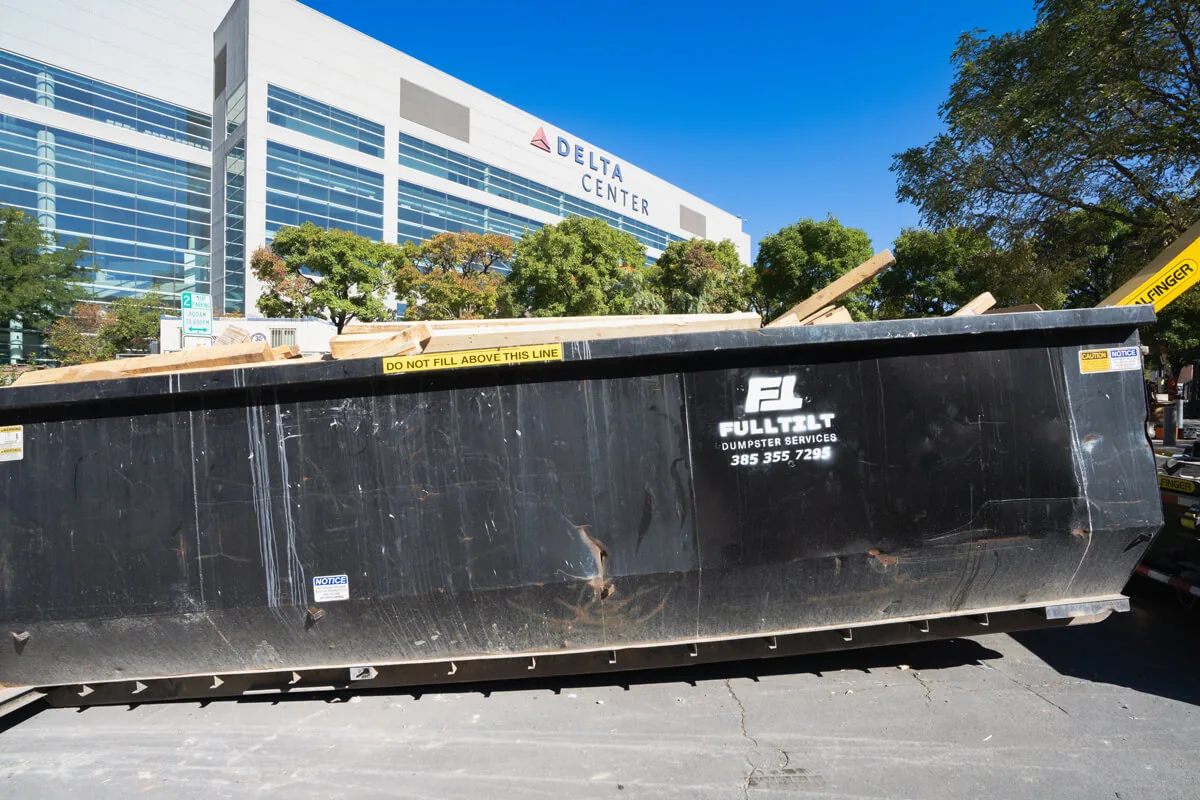
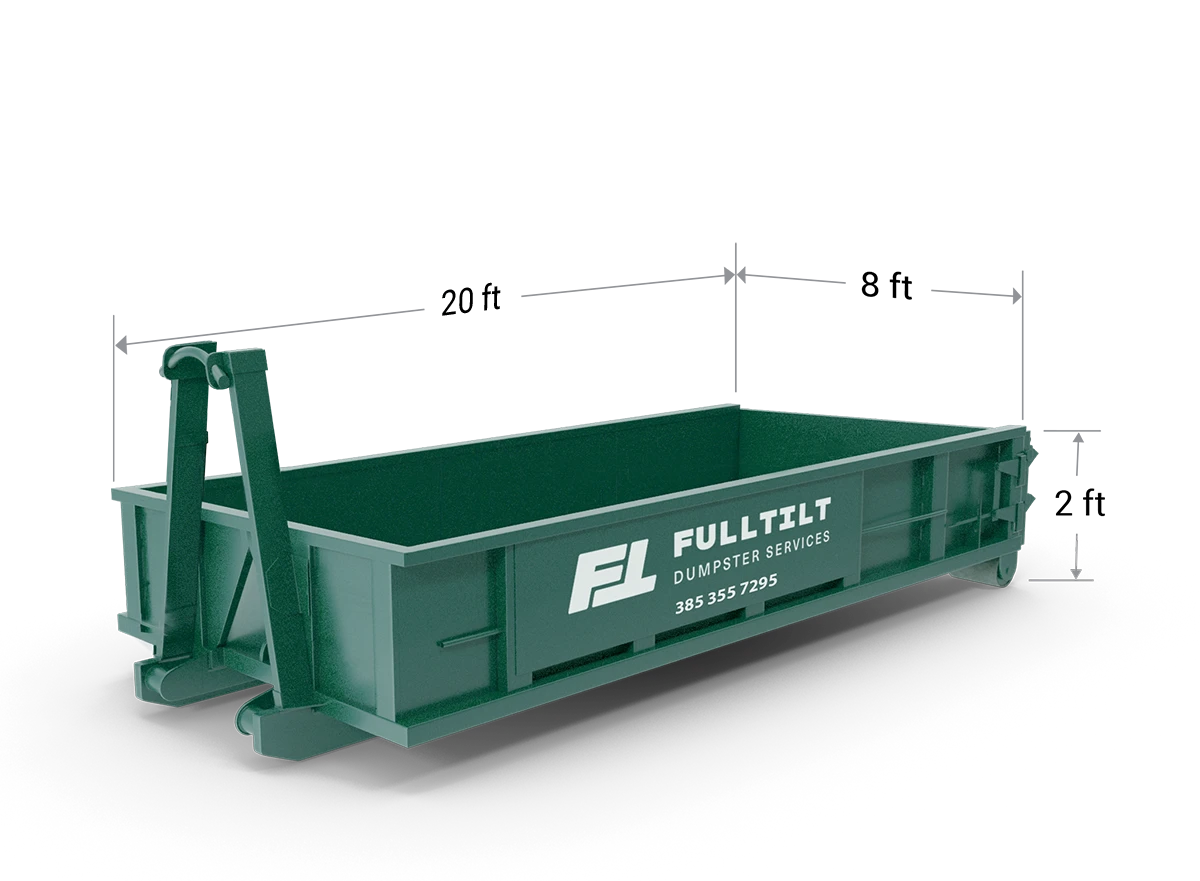
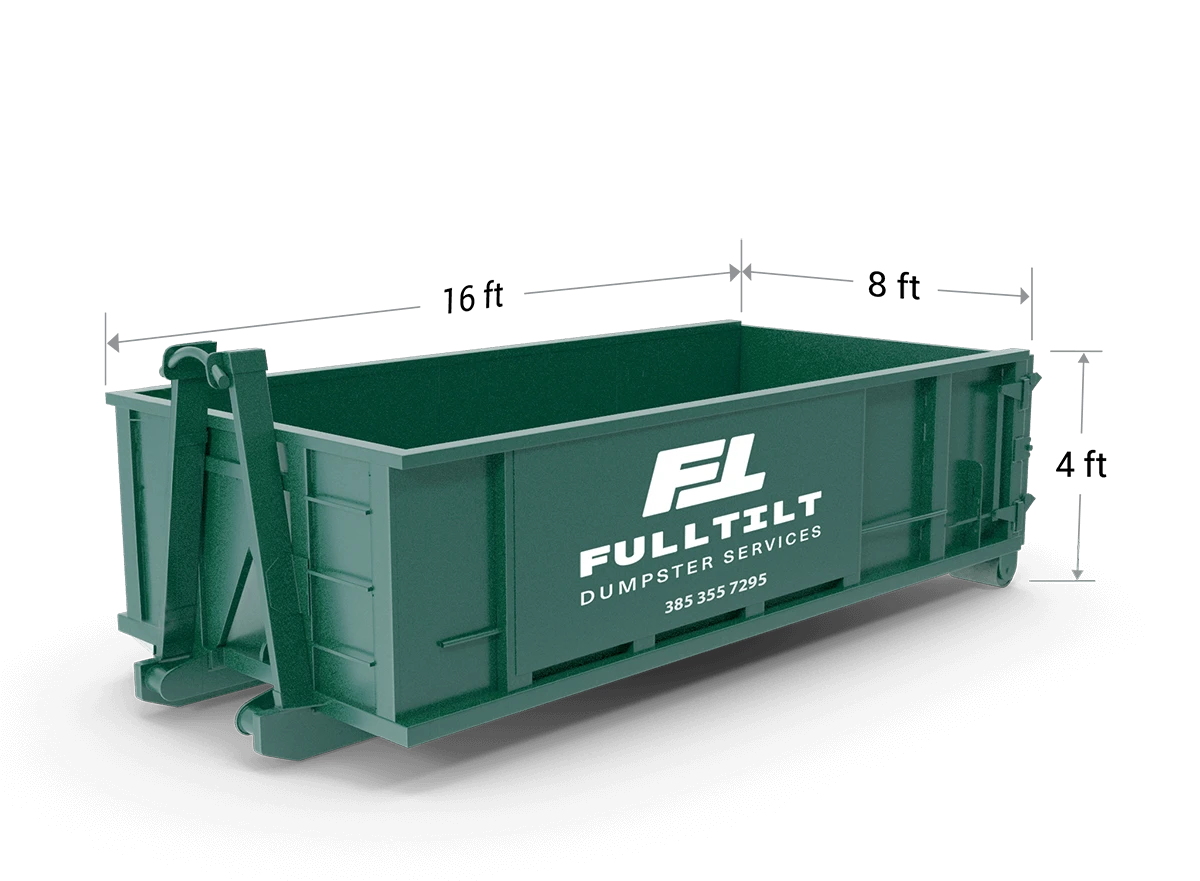
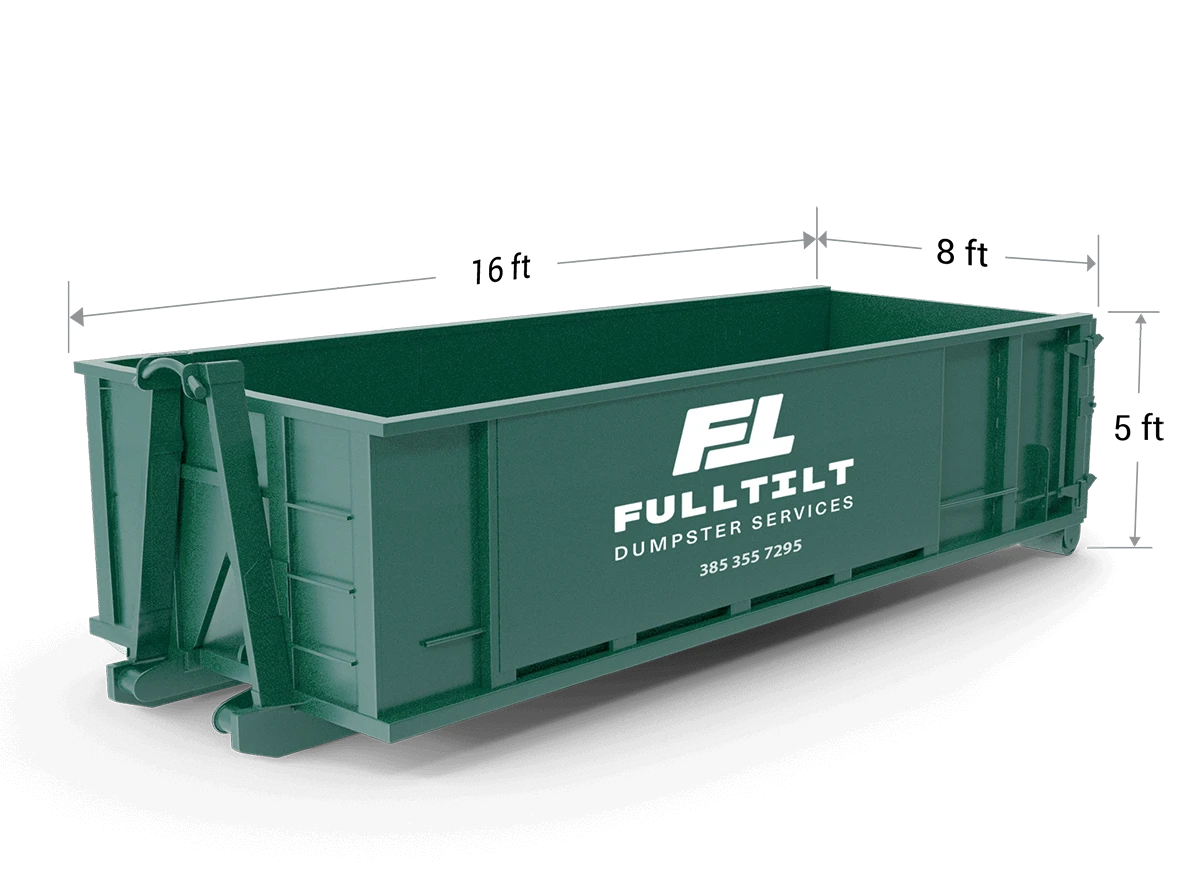
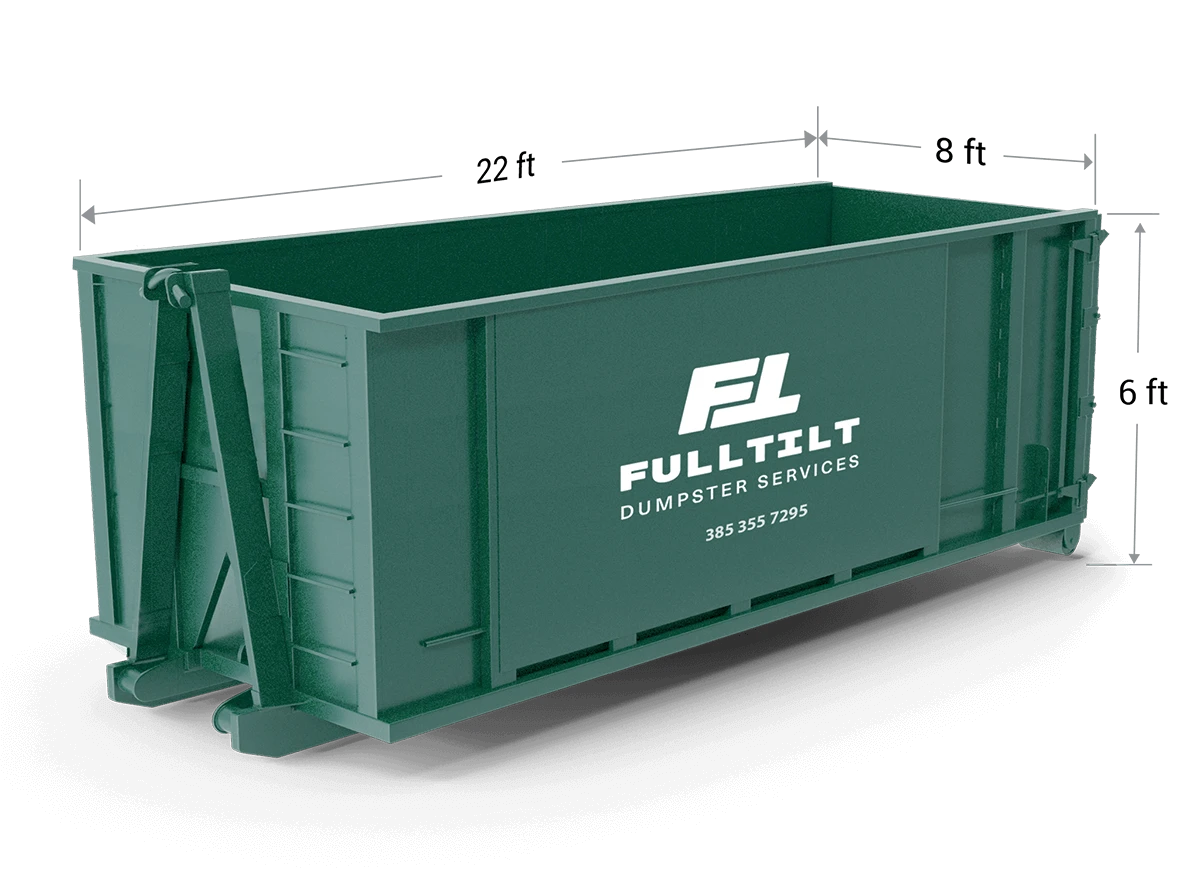
Use these published dimensions as approximate planning measurements, not guaranteed delivered-container specifications. Confirm the actual container and truck clearance before booking; its footprint alone is not enough room for delivery or pickup. Product graphics and published measurements are from Full Tilt Dumpster Services; they are not scale drawings or industry averages.
Full Tilt’s 20-yard product page and graphic list 16 ft long × 8 ft wide × 5 ft high; its homepage lists a different footprint, 22 ft long × 8 ft wide × 4.5 ft high. Confirm which container is available for your address before measuring a placement space.
For dense debris, use the 10-yard rock box guide. It is separate from the 15, 20 and 30-yard mixed-debris options below.
Volume is only half of the decision
A cubic yard measures space. It does not tell you how many tons you can load. Bulky furniture may use the available volume quickly; tile, roofing, soil or concrete may reach a hauling limit while the container still looks partly empty.
What to confirm before choosing
- Actual container length, width and height, plus the truck’s placement clearance.
- Included disposal weight, maximum approved load and any excess-weight rate.
- Whether each material in the project is allowed in that container.
- Rental length, extensions, pickup and swap terms.
Equipment and allowances are confirmed for the specific quote. Full Tilt’s product graphics show published measurements, not scale drawings or guaranteed dimensions for every delivered container.
Unsure between sizes?
Compare the 15-yard, 20-yard and 30-yard project guides. If the amount is uncertain, select Not Sure on the quote form and describe the job. Ask about a swap or additional container rather than planning an overfilled load.
Concrete, dirt, brick and asphalt need a material-specific loading plan. A larger dumpster is not automatically a suitable heavy-debris container.