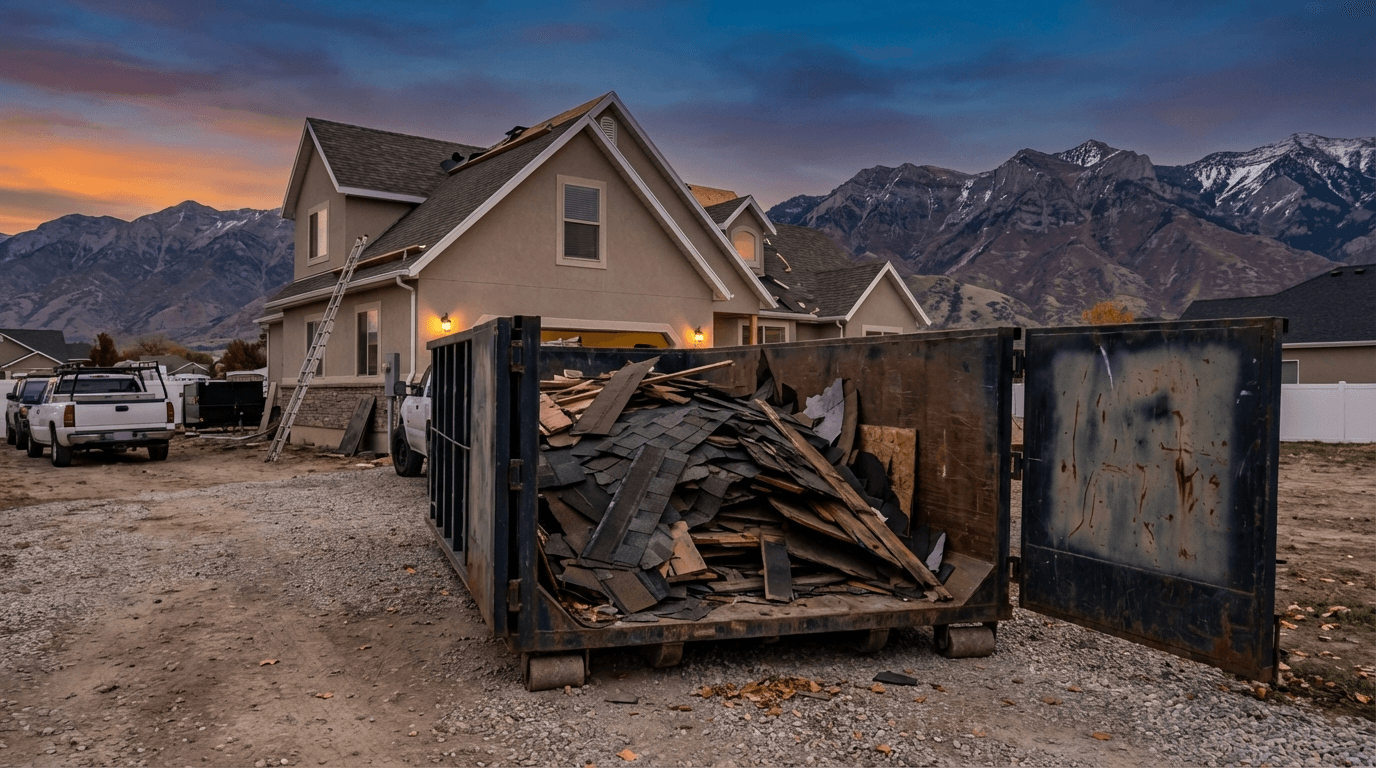
Replacing a roof is a massive undertaking that generates an incredible amount of heavy debris. To keep your property safe and organized, securing a reliable Roofing dumpster rental is the most critical step you can take. It allows you to focus on the project without worrying about the mess piling up in your yard.
Honestly, have you ever tried to move a pile of old asphalt shingles by hand? It is back-breaking work. A standard cleanup project is one thing, but roofing is a completely different animal. You aren’t just dealing with volume; you are dealing with extreme density and weight.
Here’s the thing: many homeowners in Salt Lake City and Ogden underestimate just how much debris comes off a roof. It’s not just the shingles. You have tar paper, old flashing, thousands of nails, and often damaged plywood decking. If you try to use a standard pickup truck or a generic waste plan, you are going to run into logistical nightmares immediately.
By utilizing a dedicated dumpster service, you ensure that the heavy materials are contained immediately. This prevents nails from hiding in your grass—waiting to pop a tire or injure a pet—and keeps your job site compliant with local HOA or city regulations.
One of the most common questions we get at Utah Dumpster Rentals is, “What size do I need?” Choosing the wrong size is the quickest way to blow your budget. Get one that is too small, and you are paying for a second haul. Get one that is too big, and you’re paying for air.
In the roofing industry, everything is measured in “squares.” One square equals 100 square feet of roof area. Generally, three bundles of shingles make up one square.
Let me explain how to translate this into dumpster sizing. You need to account for the fact that shingles lay flat and are dense, but the accompanying waste (packaging, wood, underlayment) takes up volume.
Roofing Dumpster Sizing Guide
| Roof Size (in Squares) | Recommended Dumpster Size | Best For |
|---|---|---|
| Up to 20 Squares | 10-Yard Dumpster | Small garages, shed roofs, or minor repairs. |
| 20 to 40 Squares | 15-Yard or 20-Yard Dumpster | Average-sized single-family homes in Ogden or SLC. |
| 40+ Squares | 20-Yard (Multiple Hauls) | Large estates, Park City luxury homes, or commercial buildings. |
| Commercial Projects | Custom Solution | Contact Us for heavy-duty logistics. |
Note: We rarely recommend 30 or 40-yard dumpsters for pure asphalt shingles because the weight usually exceeds legal transportation limits before the bin is even full.
You know what? The volume of the dumpster isn’t actually your biggest constraint—it’s the weight. Asphalt shingles are incredibly heavy. A single layer of shingles for a 2,000-square-foot roof can weigh upwards of 5,000 pounds (2.5 tons). If you are tearing off two layers—which is common in older homes around Salt Lake City—you are suddenly looking at 5 tons of debris.
Most dumpster rentals come with a “weight allowance.” If you go over that limit, you are charged a fee per ton. This is where inexperienced renters get surprised.
Pro-Tip: Always tell us exactly what you are tearing off. Is it cedar shake? Clay tile? Three-tab asphalt? Architectural shingles? Knowing the material helps us predict the density and guide you toward a rental with the appropriate weight allowance so you don’t get hit with overage fees later.
Have you considered what a multi-ton steel box might do to your driveway? Utah weather gives us hot summers and freezing winters, which can lead to cracks in concrete and asphalt over time. Placing a heavy dumpster on a heat-softened driveway in July, or a brittle one in January, carries risks.
However, damage is 100% preventable. We recommend the “wood plank” method. Before we drop off the bin, we can place thick plywood boards or sturdy wood planks under the wheels and rails of the dumpster. This disperses the weight and prevents the metal from digging into your driveway surfaces.
If you are in Park City where driveways can be steep or heated, let us know in advance. We have experienced drivers who know how to navigate difficult grades and protect high-end heated driveway systems.
You might think, “It’s just trash, I’ll just throw it in.” But how you load the dumpster dictates how much you can fit.
- Load Flat: Try to lay bundles of shingles flat rather than throwing them in a heap. This minimizes air pockets and maximizes space.
- Keep it Level: Never fill the dumpster above the top rail (“water level”). For safety reasons, our drivers cannot haul a dumpster if debris is sticking out the top. It creates a road hazard for other drivers on I-15 or I-80.
- Distribute Weight: Try to spread the debris evenly throughout the container. If you pile everything at the back door, it makes it dangerous to lift the bin onto the truck.
Here is something many homeowners overlook: Permits.
If you have room on your private driveway, you generally do not need a permit. However, if your driveway is too narrow or steep, and you need to place the dumpster on the public street, you will likely need a permit from your city, whether that’s Salt Lake City, Ogden, or a municipality in Summit County.
Street Placement Checklist:
- Permit: Check with your city engineering or streets department.
- Cones/Reflectors: If it’s on the street, it needs to be visible at night to prevent accidents.
- HOA Rules: If you live in a managed community, check their bylaws regarding dumpster placement and duration.
Living in Utah means dealing with unpredictable weather. You don’t want a dumpster sitting in your driveway filled with wet, soggy debris for weeks because a snowstorm hit halfway through your project.
We recommend booking your dumpster to arrive the day before the tear-off begins. This ensures your crew isn’t standing around waiting. Furthermore, efficient roofing crews can strip a roof in a day or two. Coordinate your pickup so you aren’t paying daily rental fees for a dumpster that is already full and just sitting there.
While we take most construction debris, there are limits. Roofing projects sometimes uncover surprises.
- Asbestos: In very old homes, some roofing tars or felts may contain asbestos. If you suspect this, you need a specialized abatement team, not a standard dumpster.
- Chemicals: Leftover cans of roofing cement, sealants, or flammable liquids cannot go in the dumpster.
- Metal Flashing: While you can put metal flashing in the dumpster, we often suggest separating copper or aluminum. You know what? You can actually take that to a scrapyard and get some cash back for it!
When you search for rentals, you will see a lot of national brokers. These are call centers that don’t own a single truck. They take your order, mark up the price, and then call a local company like us to do the job.
By working directly with Utah Dumpster Rentals, you cut out the middleman. We know the local landfills, we know the traffic patterns on Bangerter Highway and I-15, and we understand the specific needs of Utah homeowners. We offer transparent pricing, so you aren’t guessing what the final bill will be.
Replacing a roof is an investment in your home’s future. Don’t let waste management become the bottleneck of your project. Whether you are a homeowner tackling a DIY shed roof or a contractor re-roofing a massive estate in Park City, we have the equipment and the expertise to keep your job site clean and efficient.
Ready to get that old roof out of your life? We are here to make the process as smooth as possible.
Call us today at 801-877-0684 or visit our website to Request a Free Quote. Let’s get your project started on the right foot!