Managing a renovation or build is stressful enough without worrying about waste management. Securing a reliable construction dumpster rental is the key to keeping your job site clean and efficient. Let’s look at the essential factors you need to consider before the truck arrives.
Whether you are tearing out a kitchen in Sugar House, managing a commercial refit in downtown Ogden, or handling a new build up in Park City, the pile of debris grows faster than you expect. Honestly, most people underestimate just how much waste a “small” project generates.
Choosing the right dumpster isn’t just about picking a box; it’s about understanding logistics, local regulations, and waste types to avoid hidden fees. Here is everything you need to know to make the right choice for your project.
1. Accurately Estimating Your Volume (Size Matters)
You know what? The number one regret we hear from customers is, “I wish I had ordered the bigger one.” Trying to save a few dollars by squeezing a 30-yard project into a 15-yard dumpster often results in ordering a second dumpster, which doubles your delivery fees.
However, bigger isn’t always better if you have space constraints.
The Dumpster Sizing Cheat Sheet
To help you visualize what you need, here is a breakdown based on common Utah construction projects:
| Dumpster Size | Typical Capacity (Pickup Loads) | Best Suited For | Weight Considerations |
|---|---|---|---|
| 10-Yard | ~3 Loads | Small bathroom remodels, dirt removal, concrete disposal. | Great for heavy materials due to low sidewalls. |
| 15-Yard | ~4.5 Loads | Single-room renovations, flooring removal, basement cleanouts. | Good middle ground for residential driveways. |
| 20-Yard | ~6 Loads | Large kitchen remodels, roofing jobs (shingles), siding replacement. | The standard size for most residential projects. |
| 30-Yard | ~9 Loads | Major home additions, new construction, commercial cleanouts. | Requires significant space for placement. |
| 40-Yard | ~12 Loads | Full demolition, large commercial building sites. | strictly for high-volume, bulky debris. |
Let me explain why weight matters as much as volume. If you fill a 30-yard dumpster with concrete or dirt, the truck might not be able to lift it, or you’ll face massive overweight fees. For heavy materials like concrete, smaller dumpsters (10-yard) are actually safer and more cost-effective.
2. Location and Placement Constraints
Here’s the thing about operating in Utah: our geography varies wildly. A drop-off in a spacious Ogden industrial park is very different from navigating the narrow, steep streets of Park City or the tight driveways in the Avenues of Salt Lake City.
Private Property vs. Public Street
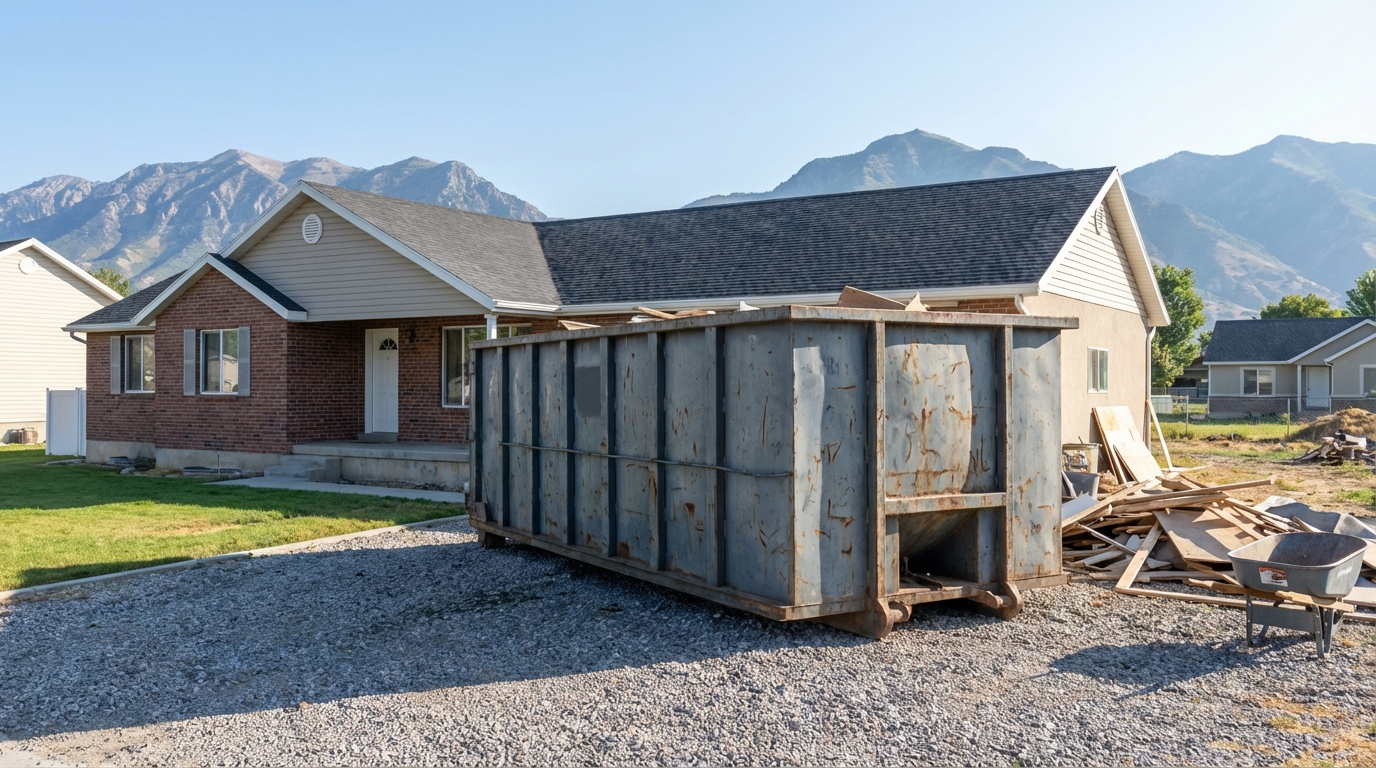
If you have a driveway large enough to accommodate the dumpster, that is always the best option. It keeps the bin close to the house (saving you labor) and avoids government red tape.
However, if you need to place the dumpster on the street, you likely need a permit.
- Salt Lake City: Requires a street obstruction permit if the bin blocks the right of way.
- Park City: extremely strict regarding street placement, especially during winter months due to snow plows.
- HOAs: If you live in a managed community, check your bylaws. Many HOAs have strict rules about how long a dumpster can sit visible from the road.
3. The “Utah Factor”: Weather and Seasons
Have you considered how the season affects your rental? In the summer, construction season is in full swing across the Wasatch Front. Inventory can get tight, so booking a week or two in advance is smart.
In the winter, however, you face a different challenge. Snow adds weight. If you rent an open-top dumpster during a Park City snowstorm, you might end up paying disposal fees for thousands of pounds of frozen water.
Pro Tip: If you are renting during winter, keep a tarp handy to cover the dumpster when you aren’t actively filling it. It keeps the snow out and the weight down.
4. Understanding What You Can (and Can’t) Toss
It’s tempting to throw everything into the bin and forget about it, right? But environmental regulations in Utah are strict, and dumping prohibited items can lead to fines or the driver refusing to haul the load until you dig the items out.
Acceptable Construction Debris
- Wood and drywall
- Roofing shingles
- Siding
- Flooring and tiles
- Cabinetry and fixtures
- Concrete and dirt (usually in designated “clean fill” dumpsters)
Prohibited Items
- Hazardous Waste: Paint, oil, asbestos, pesticides.
- Electronics: E-waste cannot go in landfills.
- Tires: These usually incur a per-tire fee or are banned entirely.
- Batteries: Major fire hazard.
- Refrigerators/AC Units: Appliances with Freon need special handling.
If you are unsure about an item, just ask us. It is always cheaper to handle hazardous waste separately than to pay contamination fees later.
5. Protecting Your Property
Construction dumpsters are heavy steel boxes. When you add three tons of drywall and 2x4s, they become incredibly heavy. You don’t want your project to finish with a cracked driveway.
How to prep your site:
- Clear the Path: Ensure there are no low-hanging power lines or tree branches. The delivery truck needs significant overhead clearance to lift the hydraulics.
- Surface Protection: We recommend laying down large sheets of plywood where the dumpster wheels and rails will sit. This distributes the weight and prevents the steel from gouging asphalt or cracking concrete.
- Accessibility: Can the driver back in straight? Navigating a massive truck around a curved driveway in the foothills is difficult.
6. Pricing Transparency: Avoiding Sticker Shock
Price is always a factor, but the cheapest base rate isn’t always the best deal. You need to understand the fee structure.
- Rental Period: How long do you need it? Most rentals are for 7 to 10 days. If your contractor gets delayed, daily extension fees can add up.
- Tonnage Limits: Each dumpster comes with a weight allowance (e.g., 2 tons for a 15-yarder). If you go over, you pay a prorated rate per ton.
- Fuel Surcharges: Depending on the distance from the transfer station, fuel costs may apply.
At Utah Dumpster Rentals, we believe in flat-rate pricing whenever possible so you know exactly what the budget looks like before we drop off the bin.
7. Efficient Loading Strategies
Believe it or not, how you load the dumpster changes how much you can fit. If you just toss things in randomly, you create air pockets—wasted space that you are paying for.
- Break it down: Smash bulky items like cabinets or drywall sheets.
- Load flat items first: Lay doors and wood flat on the bottom.
- Fill the gaps: Throw smaller debris into the empty spaces created by bulkier items.
- Don’t pyramid: Ensure the load is level at the top. If debris is sticking up like a pyramid above the rim, the driver cannot legally tarp and transport it.
Why Local Expertise Matters
When you search for rentals, you will see a lot of national brokers. These companies don’t own trucks; they just take your order, mark up the price, and call a local company like us to do the work.
By working directly with a local Utah provider, you get better communication. We know that a “tight squeeze” in Park City is different than a tight squeeze in West Valley. We understand the local landfill fees in Weber County versus Salt Lake County. We are your neighbors, and we care about the community we build in.
Ready to Start Your Project?
Construction projects are complex, but getting rid of the debris shouldn’t be. Whether you are a homeowner doing a DIY remodel or a contractor managing multiple sites, Utah Dumpster Rentals is here to support you with reliable service and transparent pricing.
Don’t let waste management hold up your job site. Call us today at 801-877-0684 to discuss your project needs, or visit our website to Request a Free Quote. Let’s keep Utah clean and your project on track.